

Color is only part of the job. In Florida, your exterior finish has to defend against UV, moisture, and storms, here’s what that takes.
When most homeowners think about exterior paint, they think about color first. A fresh color can make a home look newer, cleaner, and more attractive from the street. But in Florida, exterior paint has to do much more than look good. It has to protect your home from one of the toughest climates in the country.
Florida homes are exposed to strong UV rays, high humidity, heavy rain, wind-driven storms, heat, and moisture almost year-round. These conditions can break down standard paint faster than many homeowners expect. That is why a quality exterior finish in Florida should not be treated as simple decoration. It should be treated as a protective barrier for your home.
Florida Sun Can Break Down Exterior Paint
One of the biggest threats to exterior paint in Florida is constant sun exposure. The sun’s UV rays can cause paint color to fade, surfaces to chalk, and finishes to lose their original look. This is especially noticeable on walls that receive direct sunlight for much of the day.
Over time, a home that once looked bright and clean can start to appear dull, uneven, or washed out. Darker colors may fade faster, while lighter colors can lose their crisp appearance. But fading is not just a cosmetic problem. When the paint film weakens, the exterior surface underneath may become more vulnerable to weather and moisture.
A protective exterior coating or high-performance paint system is designed to resist UV damage better than basic paint. This helps the home maintain its appearance while giving the exterior surface stronger long-term protection.
Humidity Creates A Constant Moisture Challenge
Florida humidity is another major reason exterior paint needs real protection. Even when it is not raining, moisture is often present in the air. That moisture can affect stucco, wood, trim, masonry, and other exterior surfaces over time.
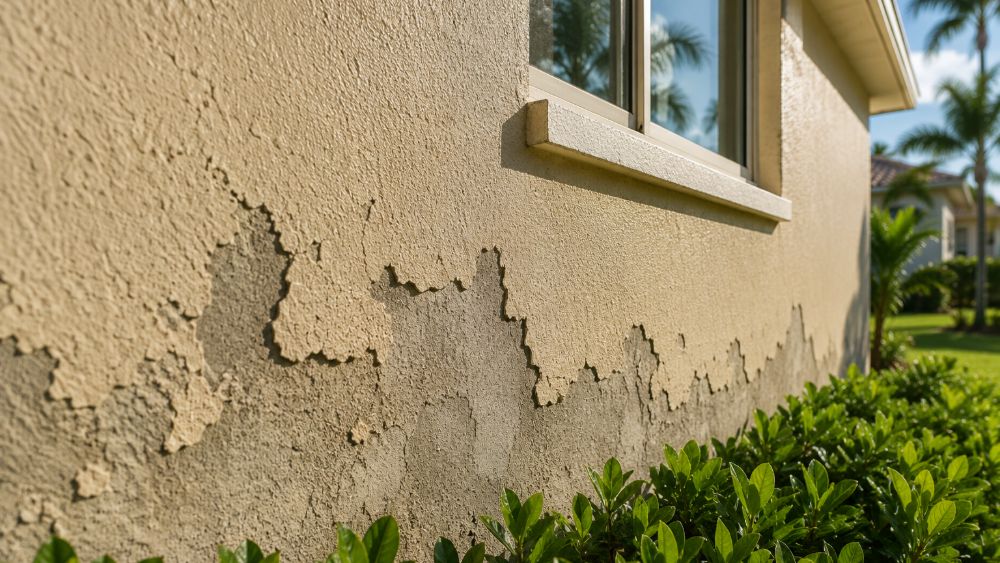
If a home’s exterior finish is weak, cracked, or poorly sealed, moisture can work its way into small openings. This can lead to bubbling, peeling, mildew, staining, and surface damage. Once moisture gets behind the paint layer, repainting over the surface may not solve the problem unless the underlying issue is repaired first.
This is why preparation and product quality matter so much. A proper exterior finish should help seal the surface and reduce moisture intrusion. For Central Florida homeowners, this is especially important because humidity is not a seasonal problem. It is part of everyday life.
Rain And Storms Put Paint To The Test
Florida rain can be intense, and during storm season, homes are often hit with wind-driven water. Rain does not only fall straight down. It can blow against walls, windows, doors, trim, and roofline areas. If the exterior finish is not strong enough, water can find weak points and cause damage.
Repeated rain exposure can also accelerate peeling and staining. Areas around windows, doors, fascia, and stucco cracks are especially important because they are common places for water to collect or enter.
A protective exterior system should help defend against these conditions. It should bond well to the surface, resist moisture, and create a more durable shield than a thin layer of standard paint.
Stucco Homes Need Extra Attention
Stucco is one of the most common exterior materials in Florida. It looks clean and works well with many home styles, but it is also porous. That means it can absorb moisture if it is not properly protected.
When stucco is covered with a weak or aging paint layer, small cracks and surface wear can allow moisture to enter. Over time, this can lead to staining, cracking, and peeling. A quality coating system can help seal stucco more effectively and provide a stronger layer of protection.
For homeowners with stucco exteriors, the goal should not be only to refresh the color. The goal should be to protect the surface from Florida’s heat, rain, humidity, and storms.
Preparation Is Part Of Real Protection
Exterior protection does not start when the paint or coating is applied. It starts with preparation. A home must be properly cleaned, inspected, repaired, and prepared before the finish goes on.
Good preparation may include pressure washing, removing loose paint, repairing cracks, sealing gaps, treating mildew, priming bare areas, and protecting surrounding surfaces. These steps help the new finish bond properly and perform longer.
If prep work is skipped or rushed, even a good product can fail early. Paint may peel, crack, or separate because the surface underneath was not ready. In Florida, where moisture and heat are constant challenges, preparation is not optional. It is one of the most important parts of the entire project.
Why Standard Paint May Not Be Enough
Standard exterior paint can improve the look of a home, but it may not always provide the level of protection Florida homes need. Many paints are relatively thin and may wear down after years of sun, rain, and humidity.
For homes that have repeated fading, peeling, chalking, or moisture issues, a more durable exterior coating may be a better solution. Exterior coatings are designed to create a thicker, stronger protective layer over the home. This can help reduce maintenance, improve durability, and extend the life of the exterior finish.
This does not mean every home needs the same product. But it does mean homeowners should look beyond color and ask what kind of protection the finish will provide.
A Strong Finish Can Add Long-Term Value
A home’s exterior is one of the first things people notice. A faded or peeling exterior can make a property look older, even if the home is structurally sound. A clean, protected finish improves curb appeal and helps the home feel well maintained.
More importantly, real exterior protection can help prevent future damage. By sealing the surface, resisting weather, and reducing moisture problems, a quality finish can support the long-term condition of the home.
For Florida homeowners, this can be a smart investment. Instead of repainting frequently or reacting to problems after they appear, a better exterior system can help protect the home before small issues become larger repairs.
Final Thoughts
Florida exterior paint needs real protection because the climate is demanding. Strong sun can fade and weaken paint. Humidity can create moisture problems. Rain and storms can test every weak point on the home’s exterior. For stucco, wood, masonry, and trim, the finish needs to do more than add color.
A proper exterior paint or coating project should focus on preparation, surface protection, durability, and long-term performance. When homeowners choose the right system and work with professionals who understand Central Florida conditions, they can get more than a fresh look. They can get a finish designed to help protect their home year after year.